Sod calculator: square feet, pallets and rolls
Add each part of the lawn and see how much sod to order, by the pallet or the roll. Then check whether seed or hydroseed would do your yard better this month.
Your lawn, roll by roll. The rolls go down row by row in a running bond, seams staggered the way a crew lays them, with the cut pieces in amber.
Outside the US? The seed advice is written for US grass regions. Pick the closest climate: North for cool summers and cold winters, Transition zone for hot summers with frost, South where it rarely freezes. The sod math works anywhere.
Your lawn
Your prices (optional)
AerialQuote doesn’t guess prices. Type the farm’s or the garden center’s numbers and the total shows here.
Your yard
Sod uses the prices on the first tab; seed uses the bag on the third. Area: — sq ft from the first tab.
Weeks are typical, not promised: weather, water and the grass change them. Seed weeks start from the grass you pick on the third tab.
Grass seed
The rate box starts at the extension rate; change it to your bag’s label rate.

How to use the sod calculator
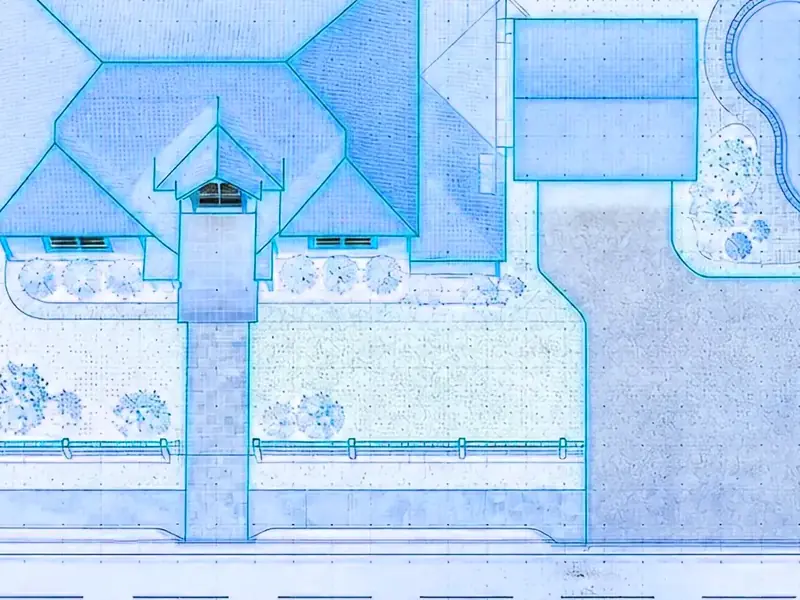
Add a box for each part of the lawn: a rectangle, a circle, a triangle, or square feet you already know. Name them (front yard, side strip) so the list makes sense later. The calculator adds the areas, adds 8 percent for cuts along beds, walks and curves, and counts the pallets and rolls. Pick your roll size; many farms sell 2 × 5 foot big rolls, others 16 × 24 inch slabs. Ask your farm how many square feet ride on one of their pallets and type it in; 400 to 550 is the usual range. If you don’t know the measurements, trace the lawn on the satellite map and the tool measures it for you.
Measure in meters? Press Metric at the top. The page opens in your country’s system and remembers your pick. You can type a unit in any box (12 ft, 3.5 m, 12'6") and it is read that way.
How it’s figured
pallets = sq ft to order ÷ sq ft per pallet, rounded up
rolls = sq ft to order ÷ sq ft per roll, rounded up
weight = sq ft to order × pounds per sq ft
Worked example: a 40 × 25 foot front yard is 1,000 square feet. With 8 percent extra you order 1,080 square feet. At 450 square feet a pallet that is 2.4 pallets, so 3 (two full pallets and 180 square feet more). It is 108 big rolls of 10 square feet. At 5.5 pounds a square foot the load weighs about 5,940 pounds, close to 3 tons, and each roll you carry weighs about 55 pounds. That is four trips in a half-ton pickup or two in a three-quarter-ton, at the loads Aldino Sod Farms gives (about 270 and 540 square feet). The extra 8 percent covers cuts and trimming, not settling: sod doesn’t settle, but soft soil under it does, so firm and level the bed first.
Seed, sod or hydroseed?
All three end in the same lawn. They differ in how long you wait, how much you water and when you can do it.
| Sod | Seed | Hydroseed | |
|---|---|---|---|
| Usable lawn | About 3 weeks | About 10 weeks | About 9 weeks |
| When | Any time the ground isn’t frozen and you can water | The sowing window for your grass | The same window as seed |
| Slopes | Works if staked | Washes off steep ground | Best: mulch and tackifier hold it |
| Shade | Most sod is sun-grown | Pick a shade grass | Only as good as the mix |
| Cost | Your quotes. The second tab adds them up for your area. | ||
Hydroseeding sprays seed, fertilizer and a paper or wood mulch in water, often with lime and a tackifier that glues it down. The mulch keeps the seed damp and in place, so it shines on slopes and big open areas where straw would blow off. You still water it like seed.
Grass types by region
| Region | Grasses | Notes |
|---|---|---|
| North (26 states, New York to Washington, Colorado and Utah) | Kentucky bluegrass, tall fescue, perennial ryegrass, fine fescues | Cool-season. Bluegrass spreads and heals; fine fescues for shade; buffalograss on the dry Plains. |
| Transition zone (New Jersey to Kansas and Oklahoma, down to North Carolina and Tennessee) | Tall fescue; bermuda and zoysia | Too hot for bluegrass, too cold for most southern grasses. Tall fescue is the usual pick. |
| South (Florida to Arizona and Hawaii) | Bermuda, zoysia, centipede, bahia, St. Augustine | Warm-season. St. Augustine takes the most shade and goes in as sod or plugs only. |
| Mixed: California and Nevada | Tall fescue where it’s cooler, bermuda where it’s hot | Northern and coastal California and Reno grow cool-season grass; the hot south grows warm-season. |
Grass seed rates
Pounds of seed per 1,000 square feet for a new lawn. Small seeds (bluegrass, bermuda) take fewer pounds than big ones (ryegrass, tall fescue). Overseeding a thin lawn takes about half, since NC State says 25 to 50 percent less.
| Grass | Calculator uses | Penn State or CSU | Tennessee, NC State or Nebraska |
|---|
Too much seed doesn’t make a thicker lawn. Crowded seedlings come up weak and get disease, which is why the Tennessee guide warns against it. The bag’s label rate wins for a blend.
When to plant
The regions follow Outsidepride’s state lawn guide. Pick your state in the bar at the top and the calculator picks the region; change it if your part of the state is different. Cool-season seed goes in best from mid-August to mid-October, when the soil is warm and the air is cooling. Spring is second best, because summer heat arrives before the roots are deep. Warm-season seed wants warm soil: April through June in the South, into July with water. Buffalograss goes in from spring, once the soil reaches 55°F, into July. Sod can go down whenever the ground isn’t frozen and you can water it every day.
Jared’s pick: Black Beauty Ultra
“I’ve used Black Beauty Ultra from Jonathan Green on my own lawn here in Buffalo and had great success with it. When I seed, it’s the bag I reach for first.” — Jared
The facts come from Jonathan Green’s own label and product page: three turf-type tall fescues, Kentucky bluegrass and perennial ryegrass; full sun to part shade, with at least 6 hours of sun; 1 pound seeds up to 200 square feet of new lawn or 400 square feet of overseeding (5 and 2.5 pounds per 1,000). The label says to keep the seedbed moist for a few weeks and to mow when the grass reaches 2½ to 3 inches. Their other Black Beauty mixes are named for the job: Dense Shade, Heavy Traffic, Heat and Drought Resistant, Fall Magic, Patcher for bare spots, and the Original tall fescue blend. AerialQuote isn’t paid by Jonathan Green; this is Jared’s own experience.
Where the numbers come from
The sod numbers are the live page’s: 8 percent extra, 450 square feet a pallet, 10 square feet a roll, 5.5 pounds a square foot. Seed rates come from Penn State Extension’s Lawn Establishment, University of Tennessee W160-B Turfgrass Establishment: Seeding, NC State’s Carolina Lawns, Colorado State and Nebraska Extension for buffalograss, and Jonathan Green’s label for Black Beauty Ultra. Straw (one 50-pound bale per 1,000 square feet) and water (⅛ to ¼ inch, about 75 to 150 gallons per 1,000 square feet a day) come from the Tennessee guide. The weeks to a usable lawn are typical figures, not a promise; the 3 weeks for sod is Aldino Sod Farms’ advice. Pickup loads and pallet weights also come from Aldino’s questions page, and the state regions from Outsidepride’s State Lawn Guide.
Tips and common mistakes
- Lay sod within a day of delivery in summer. If you have to wait, park the pallet in the shade and don’t cover it with a tarp: it cooks. On frozen ground it keeps on the pallet up to about a week (Aldino Sod Farms).
- Start along a straight edge, stagger the seams like brick, and push the edges tight without stretching.
- Water sod every day for the first two weeks, then deeper and less often. Lift a corner: roots holding means it’s knitting.
- Stay off it and don’t mow for about 3 weeks. Then mow high, 3 to 4 inches, and never take more than a quarter of the blade at once.
- Rake seed in no deeper than ¼ inch and keep the top damp until it’s up.
- Most crabgrass preventers stop grass seed too. Read the label before you use one the same season you seed.
Metric sizes
The metric numbers are exact conversions: 1 foot is exactly 0.3048 meters, so 1 square foot is 0.09290304 square meters, and 1 pound is exactly 0.45359237 kilograms. A US ton is 2,000 pounds (907.18474 kg); a metric tonne is 1,000 kilograms. Seed rates go from pounds per 1,000 square feet to kilograms per 100 square meters (multiply by about 0.488), so 5 pounds per 1,000 square feet is about 2.4 kilograms per 100 square meters. Rolls and bags keep the size they’re sold in: a 2 × 5 foot roll is about 0.6 × 1.5 meters (0.93 square meters), a 16 × 24 inch slab is about 41 × 61 centimeters, and a 7 pound bag is about 3.2 kilograms.
Questions
How much sod is on a pallet?
Usually 400 to 550 square feet, depending on the farm and the roll size. 450 square feet is a common pallet; some farms stack 540 (54 rolls of 10 square feet).
How much extra sod should I order?
About 5 to 10 percent for cuts. Lawns with lots of curves and beds need the high end.
How much does a pallet of sod weigh?
Fresh sod weighs roughly 3 to 7 pounds a square foot, depending on how wet it is, so a pallet is often over a ton. Aldino Sod Farms puts a full pallet at 1,500 to 3,000 pounds. The calculator uses 5.5, toward the wet end, so you don’t overload a trailer.
Sod or seed?
Sod gives you a lawn the same day and costs much more. Seed is far cheaper but takes a season to fill in; early fall is the best time for cool-season grass, late spring for warm-season.
How much grass seed do I need for 1,000 square feet?
It depends on the grass: about 2 pounds of Kentucky bluegrass, 7 of tall fescue, 5 of perennial ryegrass, or 1 of hulled bermuda for a new lawn. About half that to overseed.
Can I use metric?
Yes. Press Metric in the bar at the top: areas in square meters, lengths in meters, weights in kilograms and metric tonnes, seed in kilograms per 100 square meters. What you already typed keeps its size. Rolls and bags stay at the size they’re sold in.
What does a share link keep?
Your numbers stay in your browser unless you make a share link. A link keeps the areas and the result for 90 days, never a price. The video is made on your device and isn’t uploaded.