← The measuring tool · Step 10 of 25 · Tear-out
Dumpster size calculator
Add what you are tearing out. Get the size, the weight, and a picture of that dumpster on your own driveway.
See the truck back in and set your box down, at true size on your driveway, then watch it fill with your debris.
Type 320, 320 sq ft or 30 m². A unit you type always wins.
What’s coming out
Dumpster dimensions
| Size | Outside L × W × H | Holds about | Weight included |
|---|
Outside sizes from Republic Services. Every hauler’s box is a little different, so ask for theirs. Tap a row to put it on the driveway.
Where and how long
Your rental, day by day
Keep your driveway in one piece
- Ask for boards under the rails. Most drivers carry them.
- New concrete needs about a month before a loaded box sits on it.
- Hot asphalt softens: boards matter most in July.
- Leave about 22 ft (6.7 m) clear overhead for the tilting bed: wires, branches, the gutter.
Can it go in the dumpster?
| Item | Why not | If it goes in anyway |
|---|
Fine in most boxes: wood, drywall, shingles, carpet, furniture, cabinets, vinyl siding, yard debris (ask first in some towns). Your hauler’s list is the one that counts. Tap a row for the better way to get rid of it.
List your dumpster business
Free. Jared calls every business before it goes live.
Check your email
, we sent a confirm link to .
Click it and Jared gets your details right away. He’ll call you before your listing goes live.
No email in a few minutes? Check spam, or call or text Jared at 716-807-8439.
How it works
- Send the form. We email you a confirm link.
- Click the link. That makes your free account, and Jared gets an email with your business, phone, sizes and area.
- Jared calls you. Then he approves the listing.
- You’re listed. People sizing a dumpster near you can find you. Your account also opens the AerialQuote Job Board.
Your business name, phone and area are shown publicly once you’re approved. Your email isn’t.

How to use the calculator
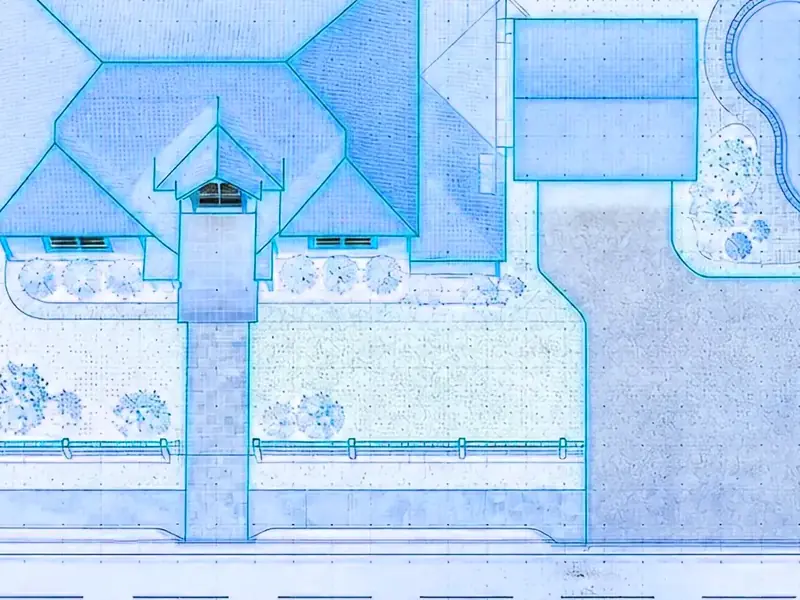
The calculator starts empty. Press a button for each thing that’s going: a deck, a roof, a kitchen or bathroom remodel, a garage or whole-house cleanout, a flooded first floor. Each press adds to your list, so a kitchen and a bathroom together is two presses. Fill in each one’s size. Measurements you don’t have, the map tool can take from the aerial view. The calculator picks the smallest dumpster that holds the loose debris, checks the weight against what that size usually includes, and draws the box on your driveway at true size. Set your driveway’s width and depth in the bar at the top; one car wide is about 12 feet (3.7 m), two cars wide about 22 (6.7 m). Imperial or Metric at the top sets how you type sizes and how the answer reads.
How it’s figured
Each item starts as the weight it has on the house. That weight is divided by its loose density, the pounds of that debris that fill one cubic yard once it is broken up and thrown in. Then 10 percent is added for the way debris stacks.
size = smallest box ≥ loose cu yd × 1.10
Worked example. A 320 sq ft (about 30 m²) wood deck with one flight of stairs and 40 ft of 36″ railing: 320 × 6.3 + 250 + 40 × 10 = 2,666 lb. At 169 lb per loose cubic yard that is 15.8 cu yd; plus 10 percent, 17.4. A 15-yard is too small, so the answer is a 20-yard, at about 1.3 tons, well inside the 2 to 3 tons it usually includes. In metric that is 13.3 m³ with the 10 percent, in a box that holds about 15 m³, at about 1.2 tonnes.
Dumpster dimensions by size
Most roll-off boxes are about 8 feet (2.5 m) wide. The 10 and 15 are shorter; the 20, 30 and 40 share nearly the same footprint, about 23 feet (7 m) long, and get their extra room from taller walls. That matters on a driveway: a 40-yard takes no more ground than a 20, but its walls stand almost 8 feet (2.4 m) tall, which is hard to throw a shingle over. Outside sizes run larger than the yards on the label because of the frame, the rails and the sloped end. The table in the second tab has every size; your hauler’s may differ by a foot.
Will it fit in my driveway?
A two-car driveway, two cars deep, takes any size with room to spare: the box sits in one lane and both cars park in the other. A one-car driveway takes every size too, but tightly. With a box 8′3″ wide there is under 2 feet on each side, the rails and the truck’s wheels run close to the edges, and with a 20-yard or bigger no car fits behind it. The truck backs in straight, so it needs about 34 feet (10.4 m) of open room in front of the box and about 22 feet (6.7 m) of clear height while the bed tilts. Watch for wires, branches and the gutter.
Permits and how long it can stay
On your own driveway most towns don’t ask for a permit. On the street almost every town does. Buffalo’s code, for example, puts dumpsters in the street under a permit from the Commissioner of Public Works and lets the city remove one without it at the owner’s cost. Street permits usually set a number of days, often 10 to 30, and may ask for reflectors at night. HOAs can be stricter than the town. Rentals usually include 7 to 14 days; past that, haulers charge by the day or swap the box.
Remodels, cleanouts and floods
A kitchen gut usually takes a 10 to 20-yard box; stone countertops and tile floors add weight quickly. A bathroom fits a 10-yard unless the walls come down too. Garage cleanouts run from a 10-yard for a few piles to a 40-yard for a packed two-car garage. A hoarder or estate cleanout of a whole house often needs two or three big boxes, swapped over several days. A flooded first floor is the heaviest of these for its size: soaked drywall and carpet weigh two to three times as much as dry, so check the included tons twice. Photograph everything for the insurance adjuster before it goes in. Sharps, animal waste or mold make a cleanout a biohazard job for a licensed company.
Weight limits and heavy debris
A dumpster is sold by volume, but the price includes only so many tons. Light debris such as deck lumber fills the box long before it gets heavy. Concrete, asphalt, brick and dirt do the opposite: a 10-yard box of broken concrete weighs about 9 tons (8 tonnes). That is why haulers send a heavy-debris dumpster for them, usually a 10-yard with a weight cap near 10 tons (9 tonnes), a fill line painted inside, and a rule that nothing else goes in. Mix shingles into a concrete load and many landfills charge the whole load at the mixed rate. Clean concrete is often recycled into gravel, and some haulers charge less for it.
What can’t go in, and what happens if it does
Haulers can’t take anything the landfill won’t, and loads are checked at the scale. The usual list: refrigerant appliances, electronics, asbestos, liquids such as paint and oil, batteries, propane tanks and tires. The mild outcome is a fee per item and a crew pulling it out. The bad one is a refused pickup with the box still full on your driveway. Some items carry fines of their own: venting refrigerant breaks the federal Clean Air Act, and New York bans TVs and computers from the trash, with fines of up to $100 per violation. The last tab lists each item and the better way to get rid of it.
Rent dumpsters yourself? The last tab lists your business for free. Jared calls every hauler before the listing goes live.
Imperial or metric
The switch at the top picks the system. The page opens in the one your browser’s region uses and remembers your choice. In metric you type square meters, meters and centimeters, and the answer reads in cubic meters and metric tonnes; a unit you type always wins, so 320 sq ft works in metric and 30 m² in imperial. Dumpster sizes stay as U.S. haulers sell them, by the cubic yard, with the cubic meters beside them. The factors are exact: a foot is 0.3048 m, a square foot 0.09290304 m², a cubic yard 0.764554857984 m³ (so a 20-yard holds about 15.3 m³), and a U.S. ton is 2,000 lb, or 907.18474 kg. A metric tonne is 1,000 kg, about 1.1 U.S. tons.
Where the numbers come from
Loose densities come from the U.S. EPA’s Standard Volume-to-Weight Conversion Factors (2016) and Contra Costa County’s construction and demolition table. Installed weights are worked out from the parts (lumber sizes, bundle weights) and checked against haulers’ size guidance. Box sizes come from Republic Services’ size guide, and the truck clearances from its placement guidance. The electronics rule is New York’s Electronic Equipment Recycling and Reuse Act. The calculator allows 10 percent for stacking; it does not allow for compaction, because nobody should be jumping on a load of nails.
- Republic Services, Dumpster size guide: outside sizes by yard.
- New York State DEC, Electronic waste: the disposal ban.
- U.S. EPA, Section 608 of the Clean Air Act: refrigerant in appliances.
- U.S. Environmental Protection Agency, Standard Volume-to-Weight Conversion Factors (2016): asphalt shingles, concrete scrap, crushed asphalt, ceramic tile, PVC.
- Contra Costa County, Volume to Weight Conversion Table for Construction and Demolition Debris: wood, metal.
- Budget Dumpster, How dumpster weight limits work: typical tons included by size.
- Mazza Recycling, How to choose the right size dumpster: deck and roof sizing used to check the model.
- Bin There Dump That, How much roofing shingles weigh: 60–80 lb per bundle.
- U.S. EPA, Asbestos.
Tips that save a size
- Cut long boards and joists in half. They stack loosely and can cost you a size.
- Load flat sheets first, then fill the gaps with small pieces.
- Nothing above the rim. Haulers won’t move an overfilled box.
- Scrap metal pays: metal roofing, a steel pool wall, aluminum siding.
- Have old cement siding tested for asbestos before anyone breaks it.

Questions
How many squares of shingles fit in a 20-yard dumpster?
By room, about 34 squares of one-layer 3-tab or 29 of architectural. By weight, either is about 3.8 tons, more than most 20-yard rentals include. Two layers double the weight, not the room.
Can I put concrete in a regular dumpster?
Usually not. Haulers want it in a heavy-debris box with a fill line, because a full regular box would be too heavy to lift.
Do I need a permit for a dumpster in my driveway?
Usually not on your own driveway, but some towns and many HOAs limit the days. The street almost always needs one.
Will a dumpster crack my driveway?
It can, mostly at the rails. Ask for boards under them, keep it off new concrete, and keep the truck off the lawn edges.
Can I use metric?
Yes. Press Metric at the top: sizes go in as square meters, meters and centimeters, and the answer reads in cubic meters and tonnes. Dumpster sizes stay in cubic yards, the way they are sold, with the cubic meters beside them.
What does a share link or email keep?
A link keeps your inputs and the result for 90 days. An email goes once, and we keep your address only if you ask for tips. Otherwise your numbers stay in your browser.
Related calculators
Trace it from above, set the height and the stairs, and get the framing and the shopping list.